Encounter · Version two
Los AngelesMirror Version, 2025
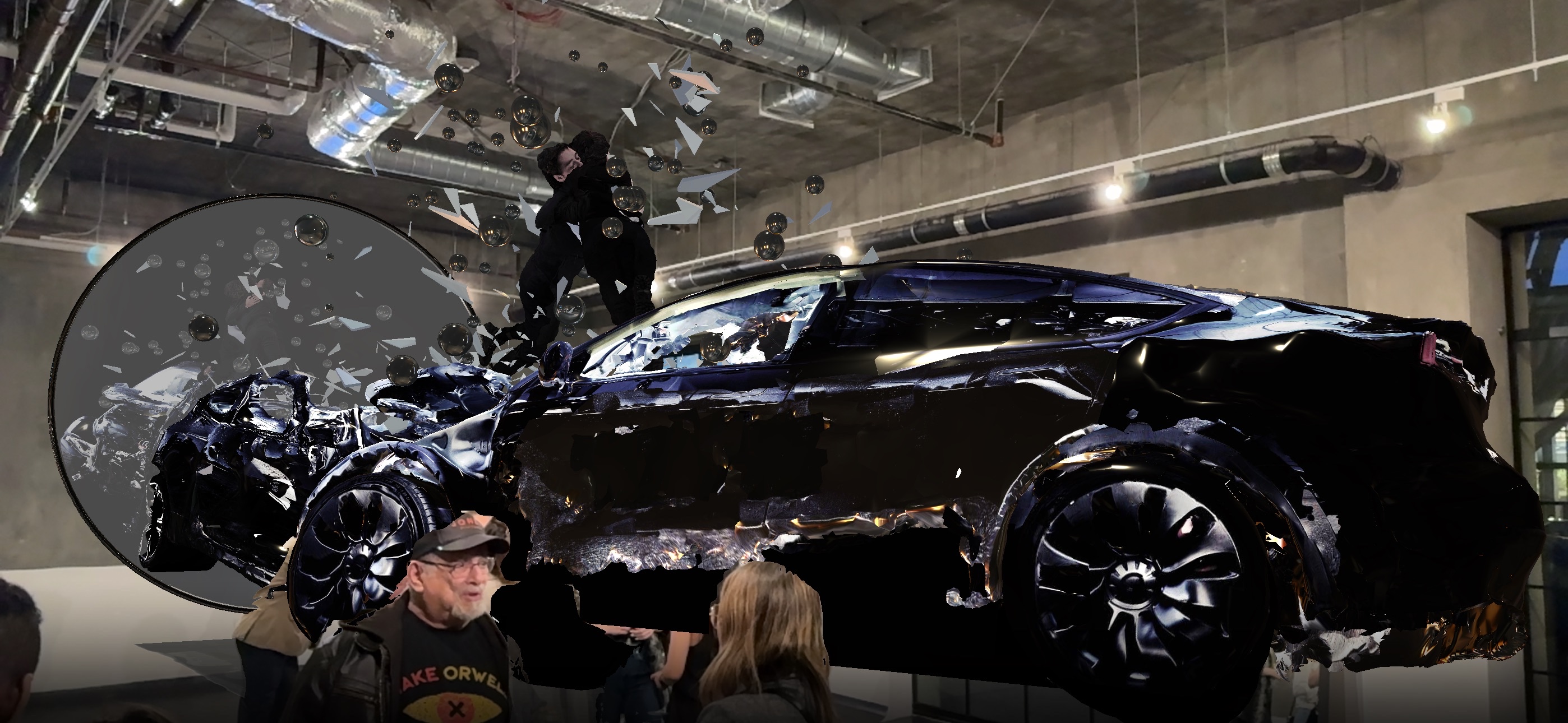
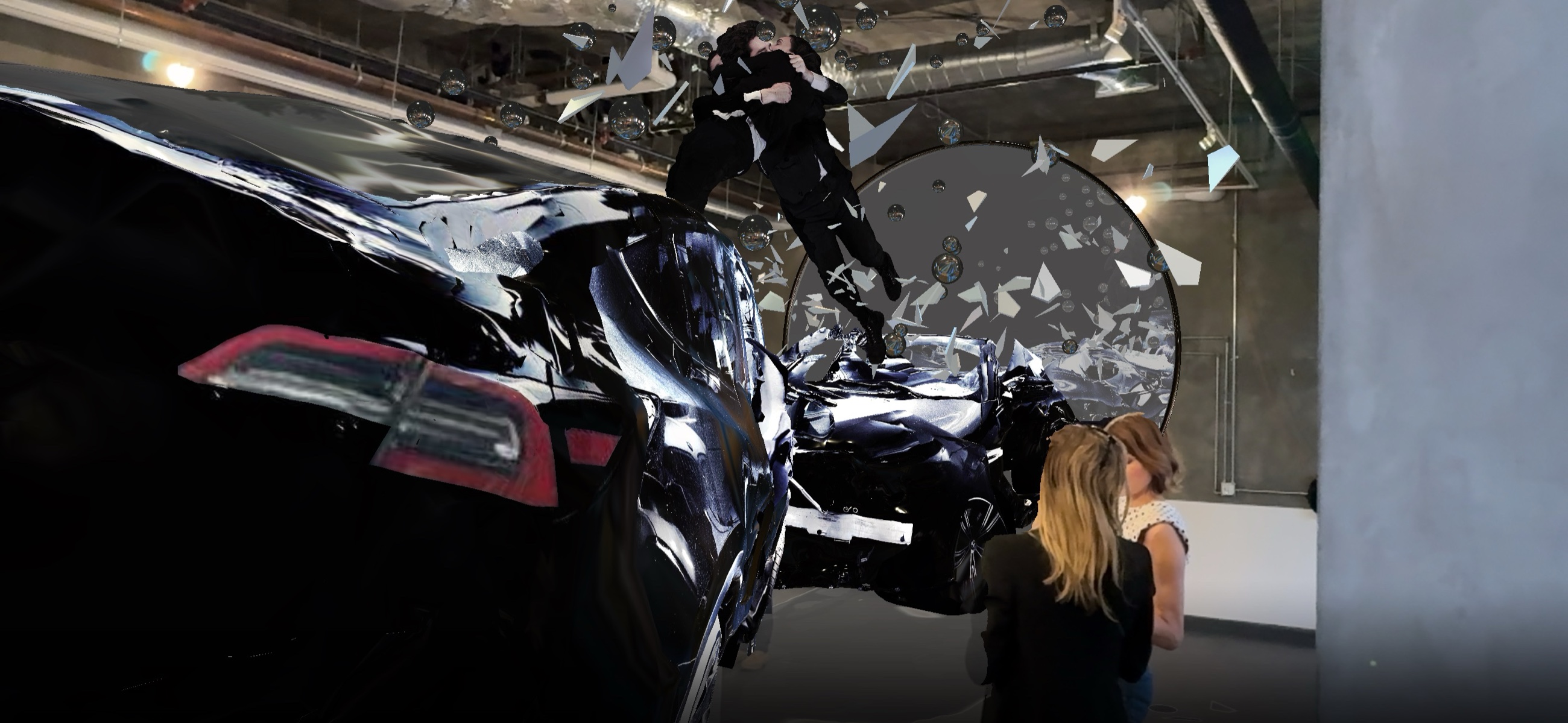
The second realisation. A large mirror set at one end of the crash—the wreck running out from it and doubled in its surface, held in a West Hollywood project space.
Encounter · Version two
The second realisation. A large mirror set at one end of the crash—the wreck running out from it and doubled in its surface, held in a West Hollywood project space.
The mirror version
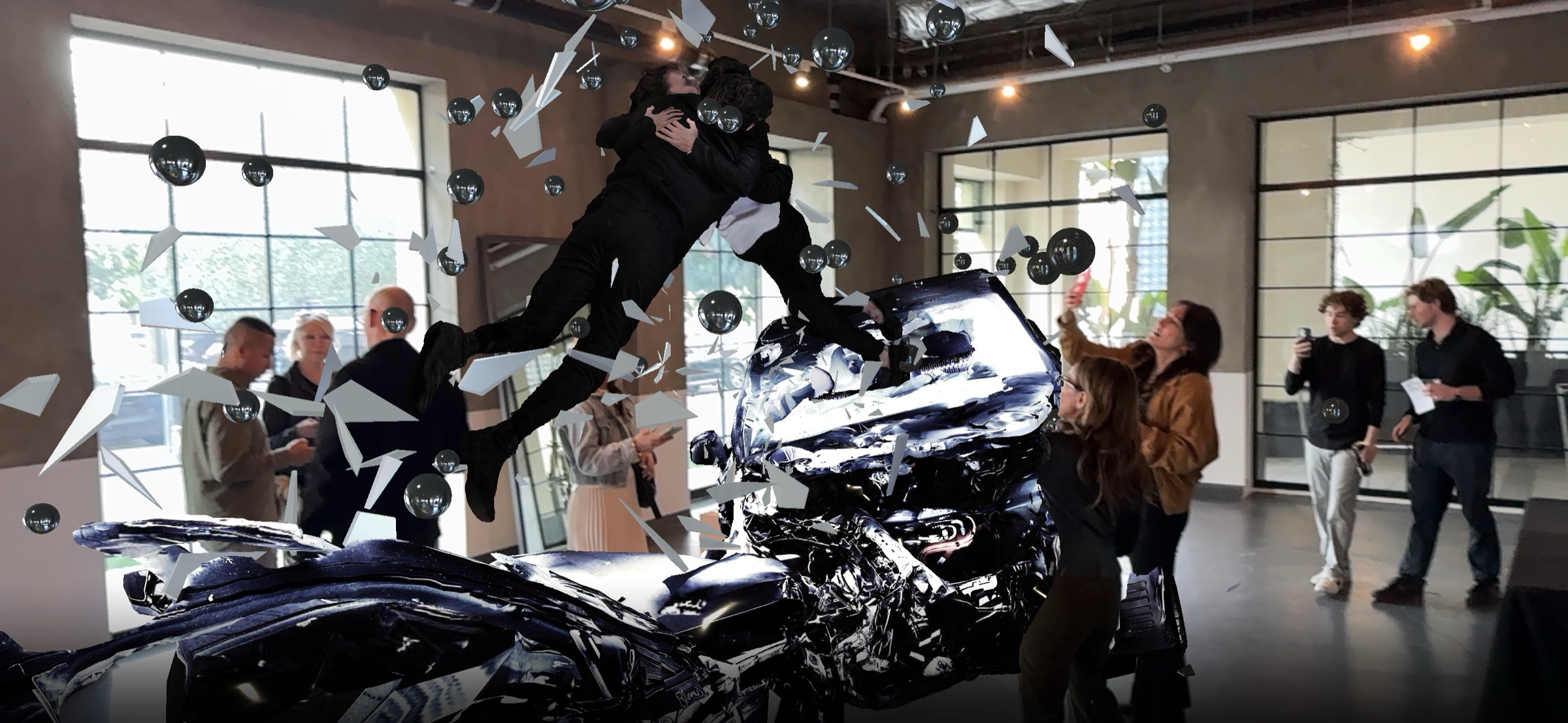
A year after MOCA London, Van Eyssen brought Encounter to Los Angeles in a second, reworked realisation—the Mirror Version. Geolocated to a raw concrete project space in West Hollywood, the life-scale crash hung once more above the floor, the mirrored spheres now carrying fragments of an LA room and the people moving through it.
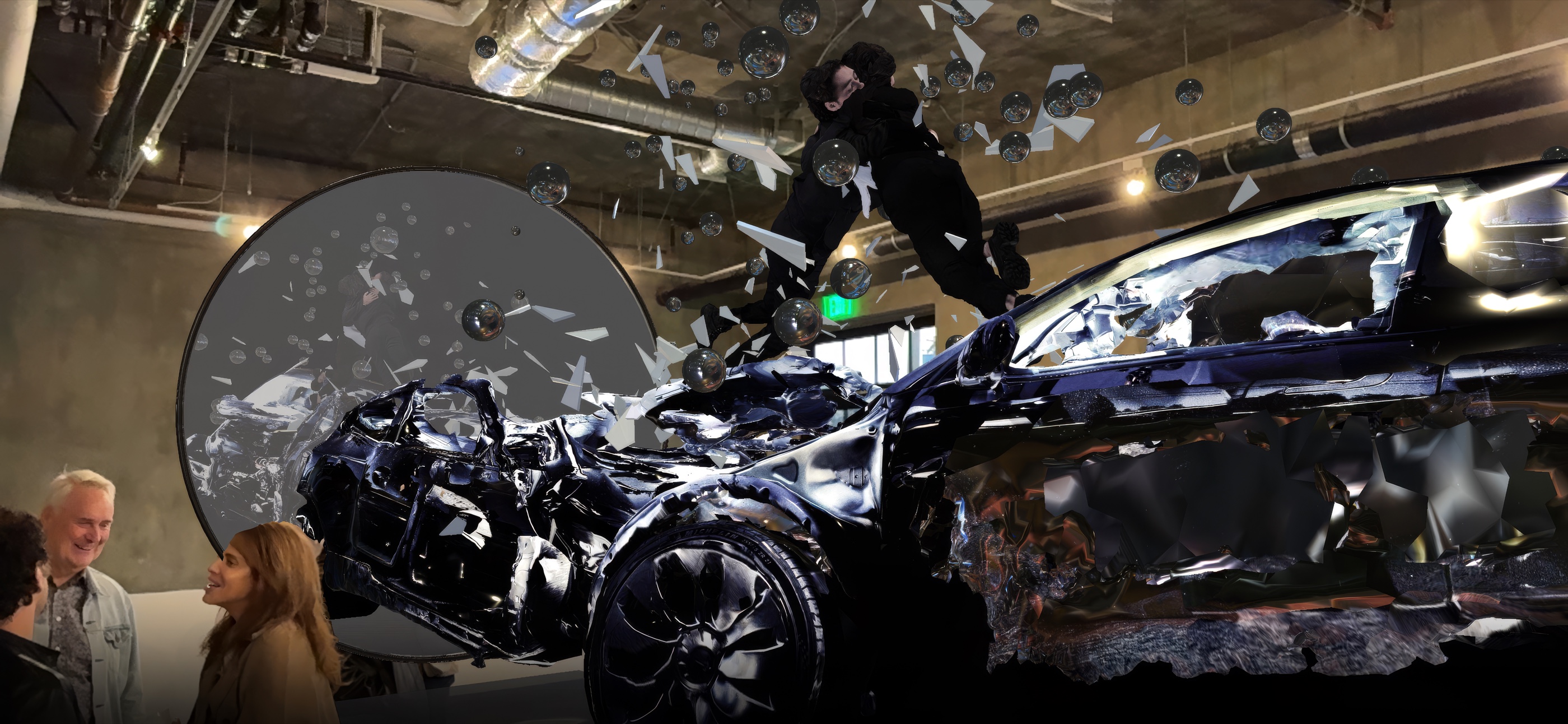
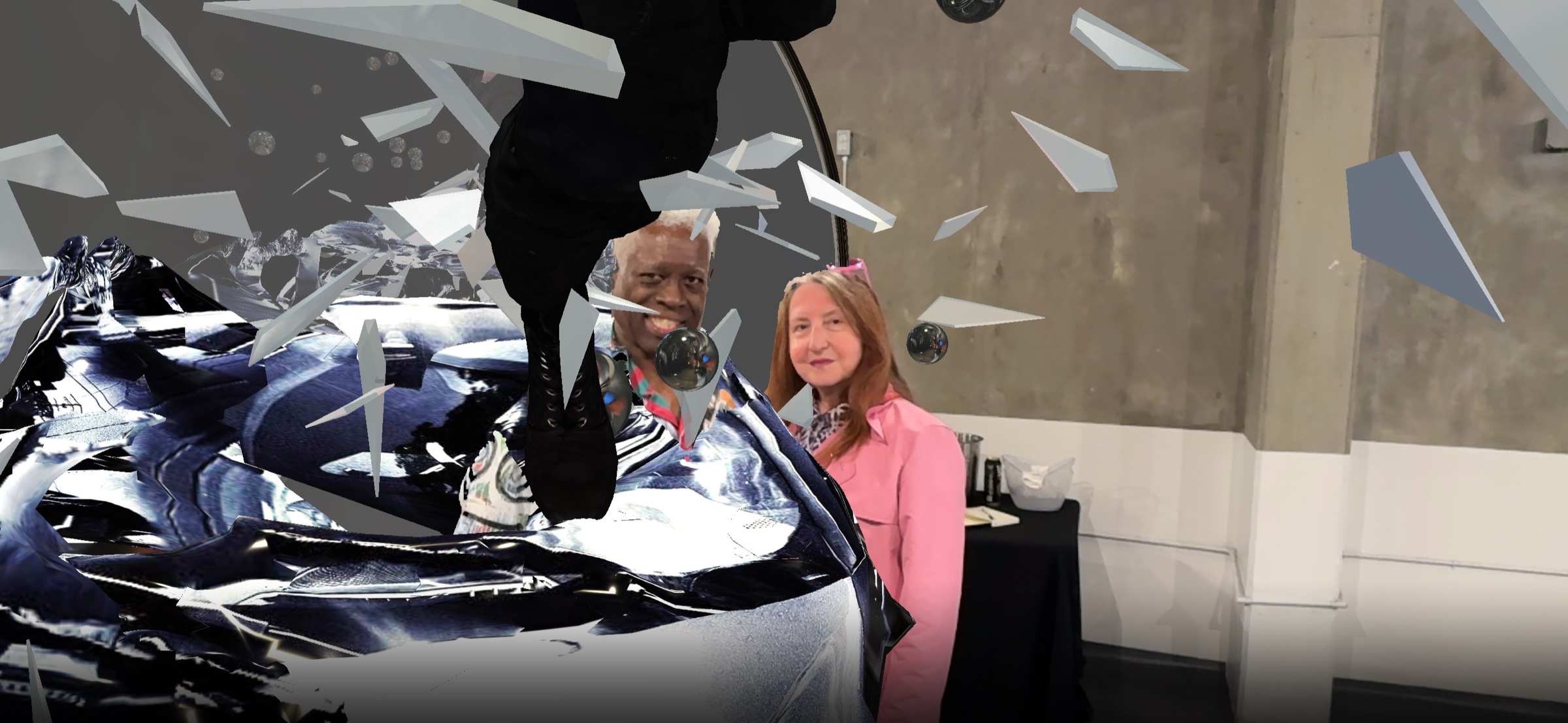
The version takes its name from a single, decisive addition: a large mirror set at one end of the sculpture. The wreck runs out from it, and in its surface the crash, the spinning shards and the suspended embrace are caught and doubled—the work meeting its own reflection. The mirror stands beside the piece, not above it; you read the collision and its double in a single glance.
Reflection runs throughout Van Eyssen’s practice—from the broken mirrors he installed across Los Angeles to the photographs collected in Dr. Michael Petry’s Mirror Mirror (Thames & Hudson). The Mirror Version turns that thinking back onto the sculpture itself.
On a phone — in the room
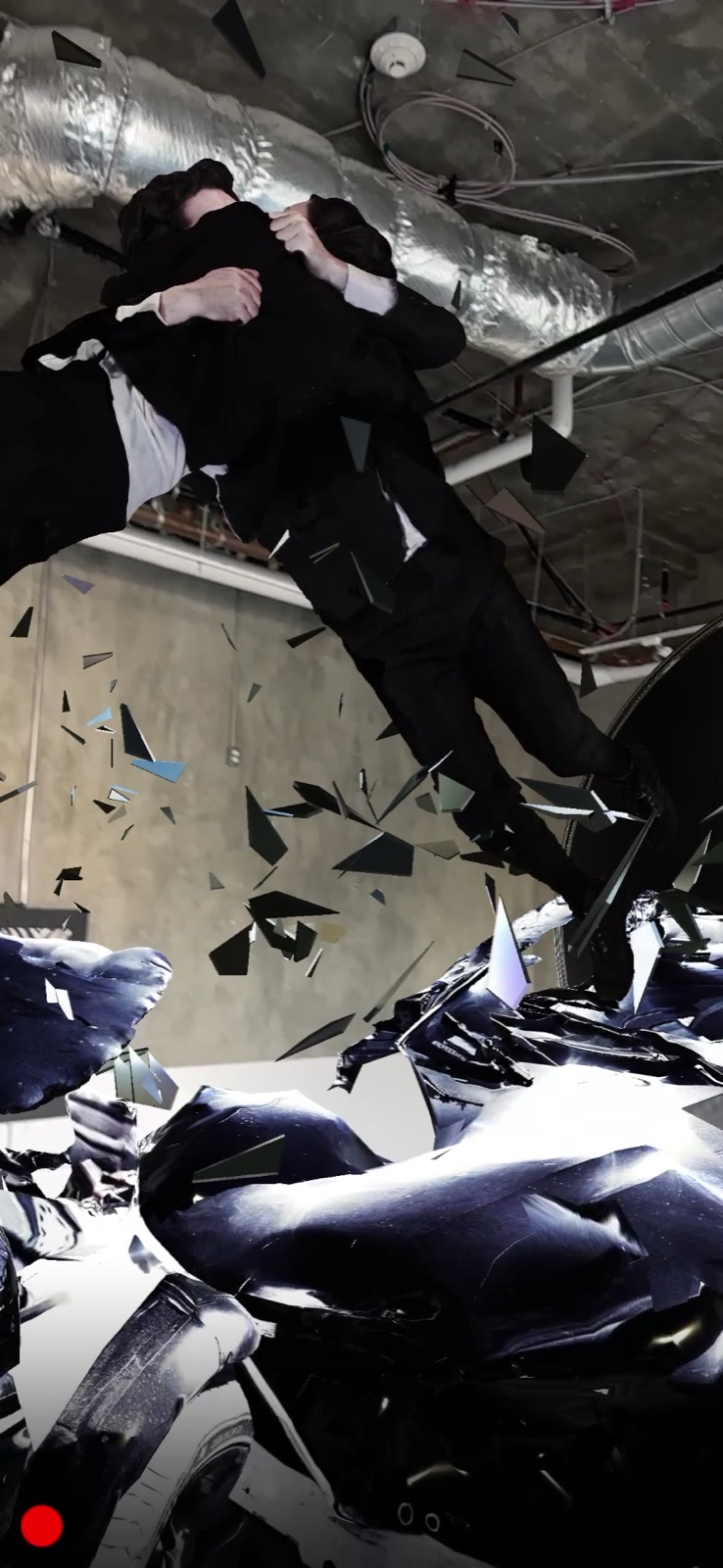
Geolocated to the West Hollywood space, Encounter was invisible until you raised a phone. Then the crash appeared, hanging in the air, and you could walk around and through it—reading the wreck from every side, the mirrored spheres catching the room, and finding the two drivers held in their embrace above the metal.
The work lived only on the screen, and only in that place: a life-scale collision you could circle on foot, suspended in a West Hollywood gallery.
“I don’t consider it a violent image, but an expression of the moment of emotional encounter, or loss.”
David Van Eyssen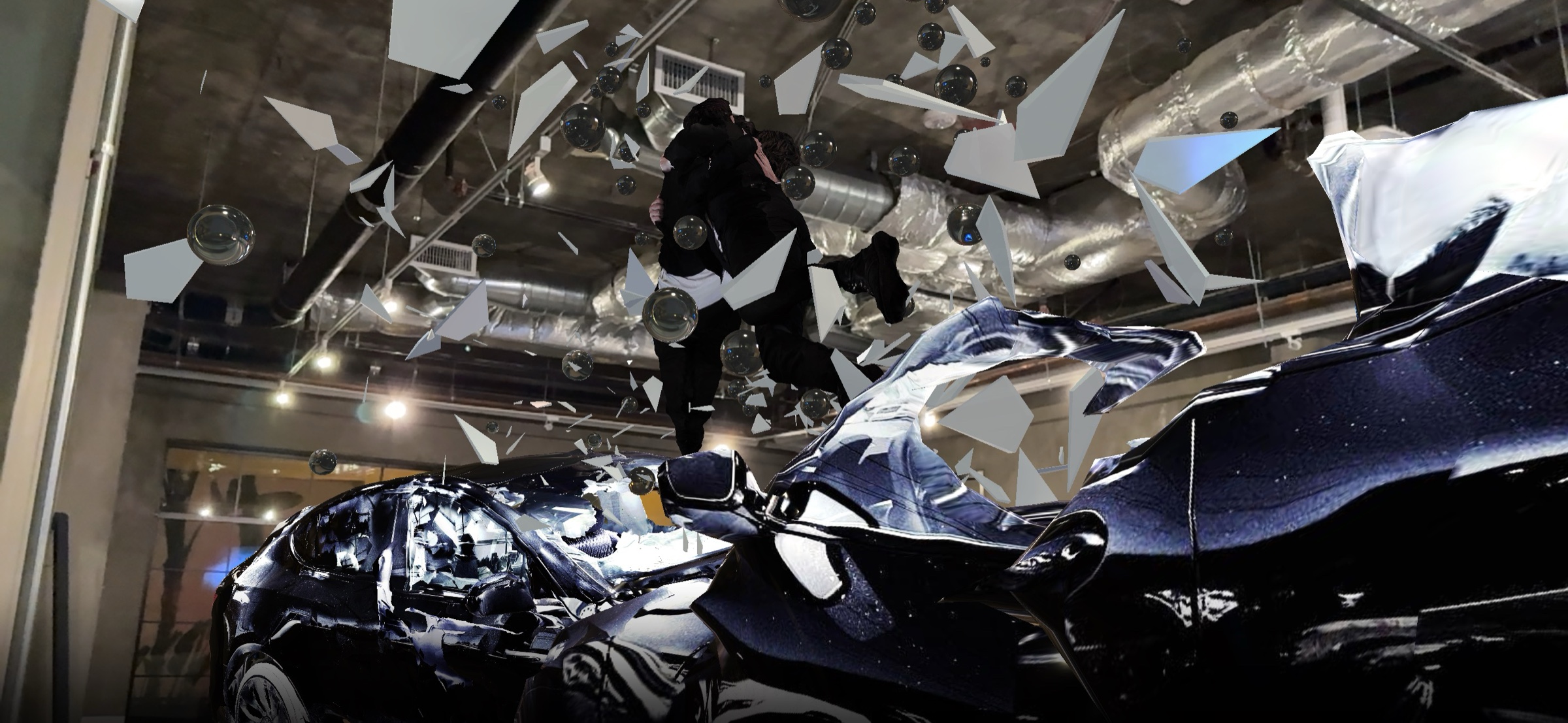
Shown